
Panorama roadmaps and wall slide view
How often have you actually worn 3D glasses?
- panorama roadmap
- wall slide view
- 3D glasses
- Matterport

The shock of seeing Avatar in 3D is still clear.
Anyone who wears glasses had to put 3D glasses on top. It was inconvenient, but the visual experience was large enough to take that on.
Since then, every time Avatar comes around I still stack glasses on glasses for a three-hour film.
Outside the cinema, though, I can barely remember wearing 3D glasses in daily life.
A tool can be innovative. If there is no scene to use it in, it is just glasses.
It started with the scanning gear at school
A university lecture was the first time I met 3D space scanning.
I started a company with the school’s equipment, and introduced spaces through Matterport.
If you are reading this, there is a good chance you have walked a 3D space at least once.
Most people still do not know this kind of content even exists.
The space is there. The way of looking at it is not familiar.
Not capturing the whole room. Joining the walls.
When we photographed an art exhibition, a client said this.
“I don’t want to show the whole space. I want to follow the works.”
Instead of putting the room into one 360 take, the idea was to join the walls sideways, like a panorama continuing.
That is how wall slide view appeared.

Alleys, galleries, and shops you walk become a panorama roadmap.
A space whose body is walls and works becomes a wall slide view.
The camera can be the same. What you put in it, and who is looking, changes the result.
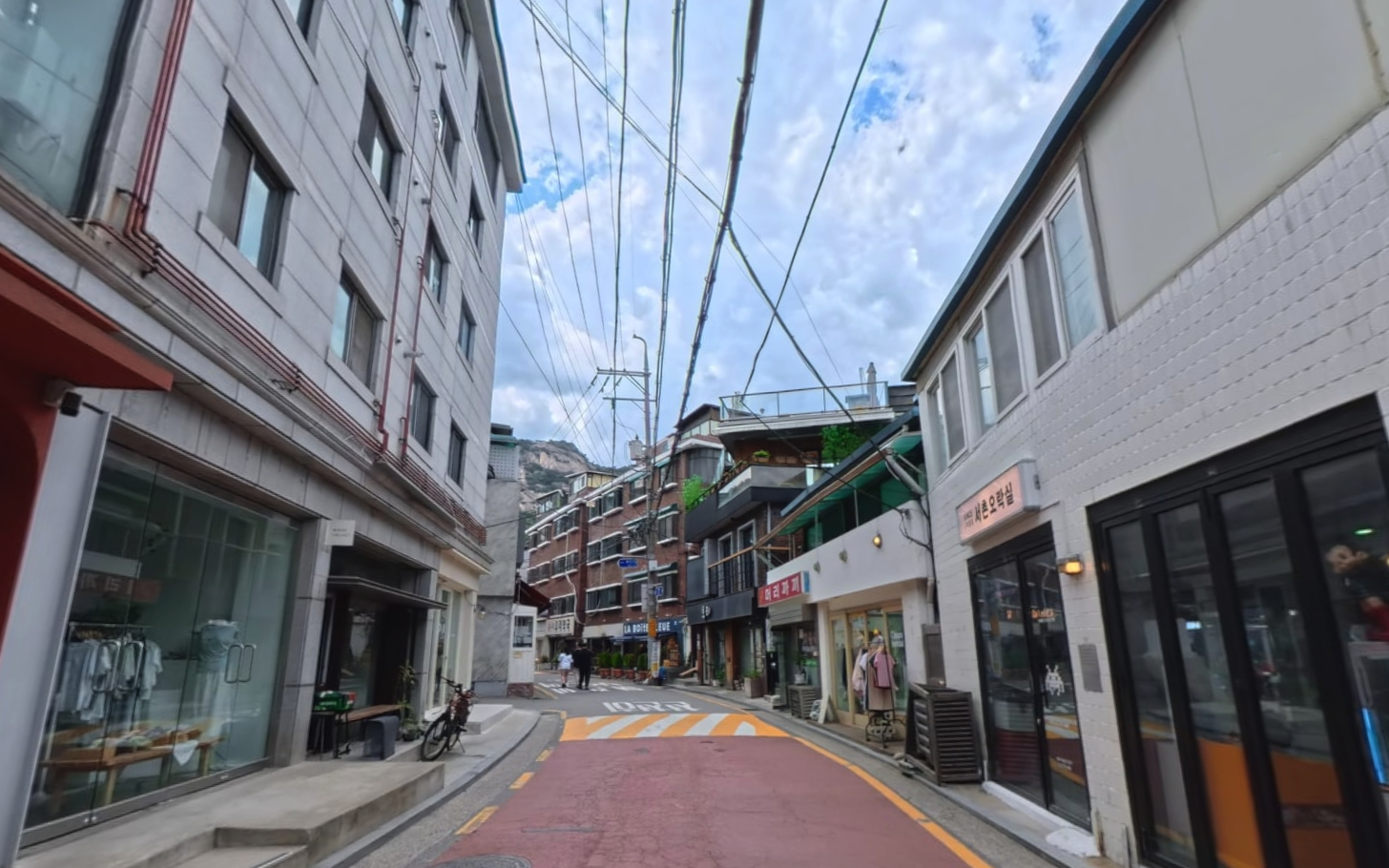
3D glasses are still just glasses
The conclusion is simple.
3D glasses are a strong experience. They are still only a tool.
What matters is what you put in them, and at what speed someone is looking.
Spatial content is the same.
Not every space needs to be shot the same way.
Capture through web publishing can continue at Metatour3D.